
Chapter 1: New format; same material
Welcome to a new experimental method of getting some hyperfixation out there that isn’t just segmented threads on Twitter.
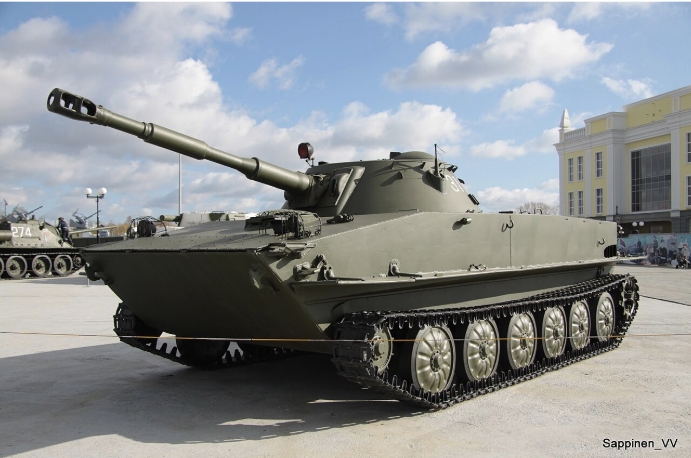
For this first trial run; I shall be telling you about a very interesting tank and the veritable cascade of off-shoots it inspired…
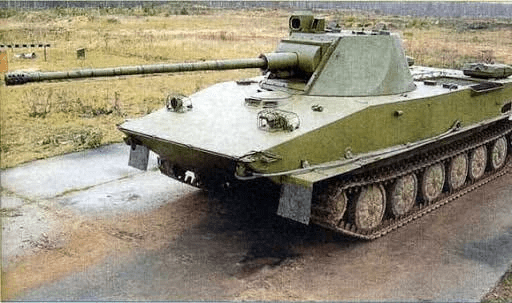
The PT-76!
Chapter 2: Post-WWII Tactics Evaluation
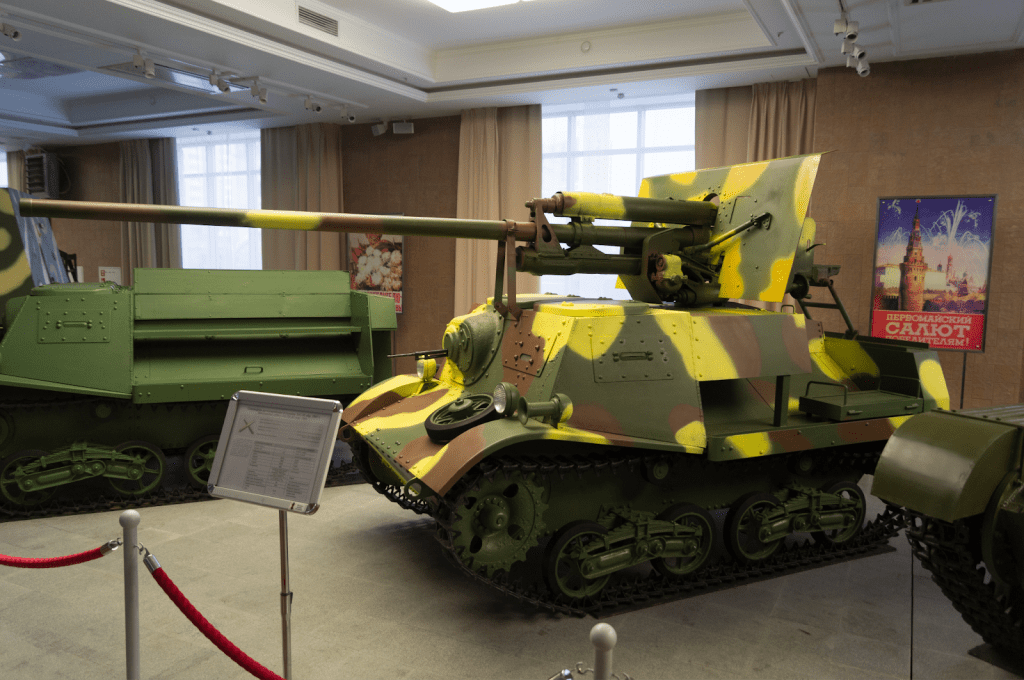
At the end of WWII; with the Axis Powers defeated and many MANY countries recovering from the conflict; The Allied nations decided to update their equipment based on findings both made during and after the war. Among these innovations are the Assault Rifle, the Main Battle Tank and Jet-Propelled Aircraft.
But for our essay today; we shall focus on the Light Tank.
Among the nations running light tanks in WWII, the Soviet Union had found that their doctrine was good enough to keep going into the Cold War. Basically the USSR LTs would have to be fast moving and all terrain.

Chapter 3: Attack Of The Objects
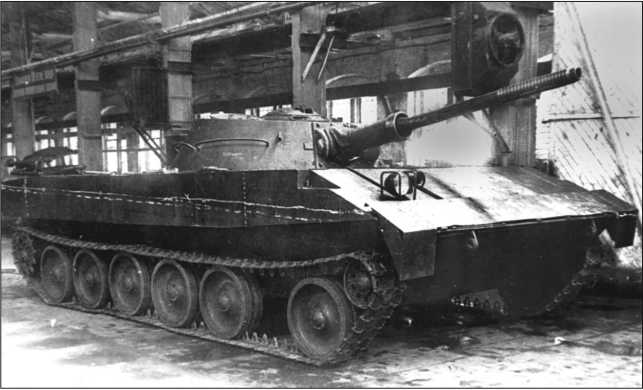
Following some failed prototypes of an amphibious LT and accompanying derivative APC (said prior prototypes requiring set-up before water fording), the Sormovo No.112 manufacturing plant produced two prototypes of the LT dubbed Object 101 (or R39), in the year 1948. Both failed so badly that the Sormovo bigwigs responsible were reportedly Vanished from existence, though the circumstances are unclear.
Fast forward to the next year, 1949; the idea is ordered by Supreme Communist Command to be revitalized! The chosen designs for the LT and APC would be Objects 740 and 750 respectively.
Chapter 4: Amphibious But Rubbish
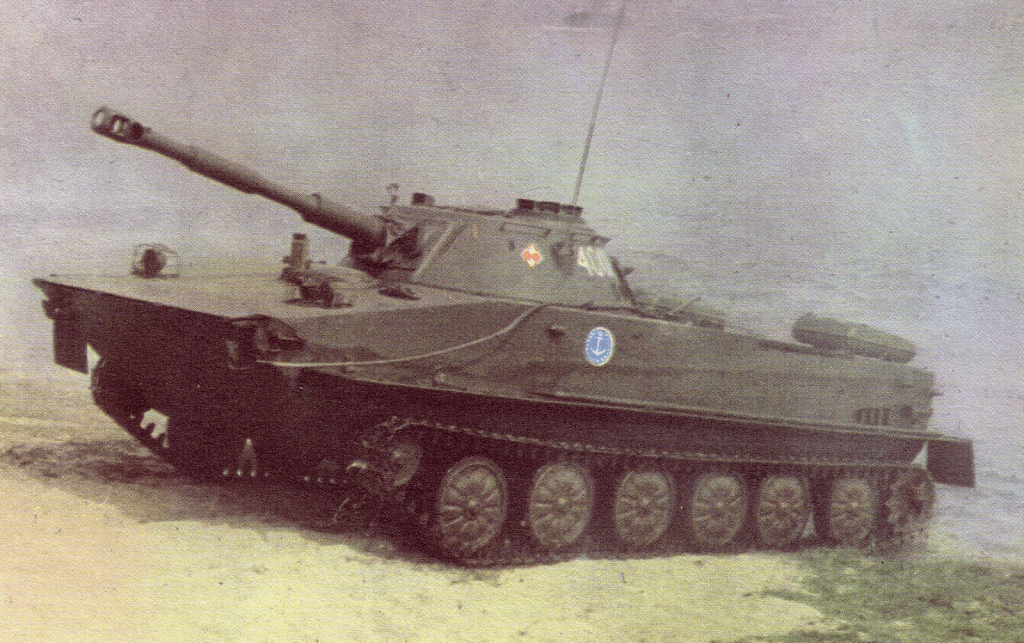
From the very beginning; the development of the PT-76 was a mess, mostly so they could shoehorn the water-fording. The compromises made had resulted in a tank that…
- Had a then-obsolete 76mm gun (hence the PT-76 name)
- Had no armour
- Had no gun stabilizer
- Accidentally set off a chain of events that spawned 4 different off-shoots of tank development.
- And didn’t actually work for the NEW doctrine that the USSR was already shifting to in regards to their Light Tanks.
We’ll get back to those tank off-shoots in a bit, but what’s important to know about the PT-76 and its derivative APC, the BTR-50 is that the main thing they did well was swimming.
Now about those off-shoots!

Chapter 5: Copy-Catfish
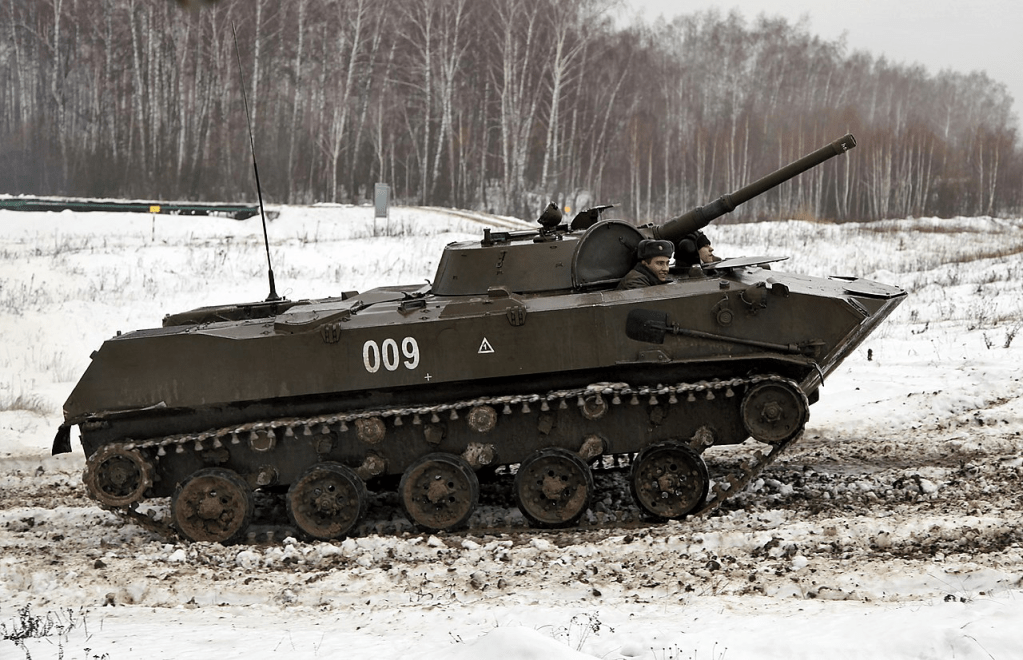
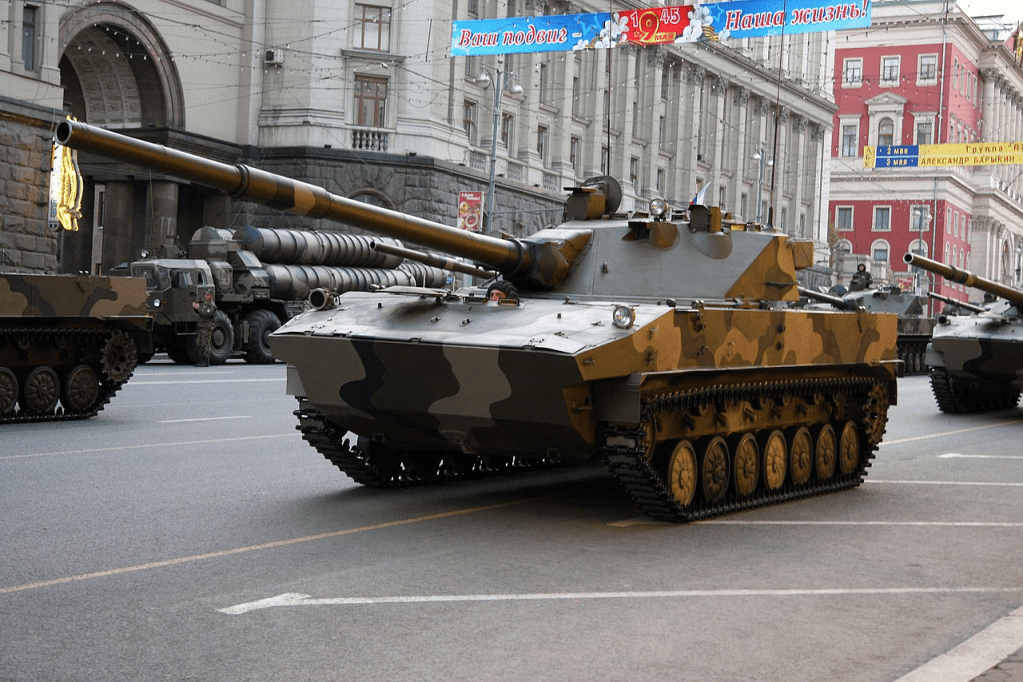
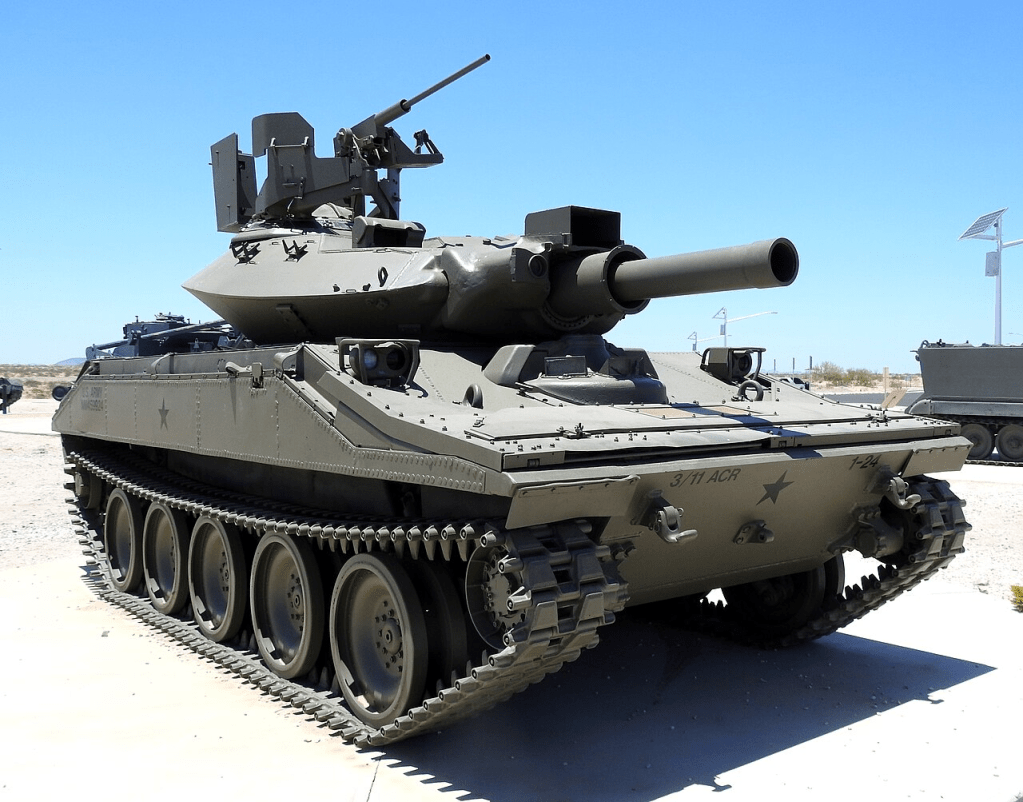
One of these is NOT like the others! That being said, the PT-76’s off-shoots are as follows: the Russian BMP, BMD and Sprut amphibious LTs and the American M551 Sheridan.
The BMP/D and the Sprut are kinda self-explanatory, they’re all Russian and can swim; the BMP and BMD even getting updated over time to share parts. But the Sheridan is a bit more unexpected. Long story about the Sheridan is that the Americans found a wrecked PT-76 in the field and Congress decreed that their next LT was to be amphibious AND air-portable.
The Sheridan was only air-portable, the amphibious part seems to have been dropped (at least according to my testing done in War Thunder)
Chapter 6: Closing Thoughts
With China and North Korea also producing their own PT-76 copies and derivatives of even THOSE, as well as the PT-76 itself still being in service in some countries (with failed plans to modernize it for future use with the Motherland), it’s safe to assume that the Amphi-Tank has left quite a mark on history. One that I find fascinating enough to dedicate an entire essay to! Needless to say; I acknowledge that this train of thought has led to very… let’s say… mediocre tanks in video games, as well as a variety of actual incidents involving the PT-76 and its offspring failing on a handful of occasions; one incident even resulting in civilian deaths outside of combat.
All in all, I find these specimens fascinating enough that I hope to grind the Soviet tech-tree in War Thunder to get all the BMPs, the eventual BMD-4M2 coming in an (as of writing) upcoming update as well as the Chinese Obj 211 and Type 63, among many MANY other similarly amphibious tanks!In the end; thanks for reading!
 Records of an Aspie